Navigating Nutrition

Smart Eating, Made Easy

Nutritious, delicious, and no-fuss—discover how our products make healthy living simple.

Eating better doesn’t have to mean doing more. Our products are designed to fit your life—quick to prep, easy to love, and packed with the good stuff. No complicated labels, no mystery ingredients. Just real food that works hard behind the scenes so you don’t have to.


Whether you're fueling up for the day or winding down at night, we’ve got tasty, feel-good options that meet you where you are.

From fiber-rich snacks to protein-packed meals, every product is backed by research and built for real life. No fads. No fluff. Just functional food that supports energy, focus, and overall wellness.


Because when eating well feels effortless, it’s easier to stick with it—and actually enjoy the journey.

By Coach Oca December 27, 2025
Every time we see or hear the word “nitrates”, we almost instantly react to it as being bad or evil. We usually encounter nitrates in food like cured meats, longganisa, tapa, tocino, and sausage—and we associate these kinds of food to being unhealthy. How much of this fear is justified? And how much of it is based on unfounded science? What if nitrates were actually beneficial to our health? What if discarding them from our diet means we are missing out on a good thing? Nitrates are found in nature. They are naturally occurring ions composed of nitrogen and oxygen and are found ordinarily in soil, water, and plants. When ingested, nitrates accumulate in the saliva, converted into nitrites, and eventually become Nitric Oxide (NO) in the gut, which is important to maintaining our vascular health (healthy circulatory system). Nitric Oxide is a gaseous molecule that acts as a crucial signaling molecule in blood vessel dilation, neurotransmission, and immune response. It is because of Nitric Oxide that our blood pressure is stable. The lack of it could lead to hypertension and the beginning of a cardiovascular disease. The history of nitrates goes back to ancient civilizations (Sumerians, Greeks, Romans) when the practice of salting meats to draw moisture and preserve its flavor was popularized. Adding potassium nitrate (saltpeter) would give the meat a reddish color as the nitrates react to the proteins (myoglobin) in the meat. Nitrates are most commonly sourced from vegetables like spinach, beets, lettuce, and celery. The health concerns about nitrates stem from some animal research where nitrates were found to react to amines in an acidic environment forming “nitrosamines”. This allegedly has the potential to damage our DNA, by promoting mutations, and can therefore be carcinogenic. However, none of these tests have been done on humans, and the correlational studies have been found weak. Thus, the over-all benefits of eating food with nitrates is still quite convincing. Nitrates can be quickly absorbed through the saliva and converted to nitrite by oral bacteria and then converted to Nitric Oxide in the stomach. As the bloodstream picks them up, one can immediately get the benefits of vasodilation in the artery walls, resulting to more stable blood pressure—a key marker for cardiovascular health. Moreover, nitrites have also been found to help improve mitochondria efficiency, allowing healthy ATP production (energy molecules) in the cells and improving insulin sensitivity. Nitrite also promotes conversion of white fat (the slow metabolism fat) to beige fat which leads to higher mitochondrial uncoupling for better metabolic health. I believe that nitrates have been unfairly judged in the medical field due to the society’s older biases against meats, including processed meats. Meats, especially from properly-raised cows, are nature’s most complete food for humans. Indeed, we have evolved these strong bodies and brains of ours from a meat-eating, animal- hunting, cave dwelling group of ancestors into conscious-eaters today. Today, our ancestors’ food preparation practices of meat preservation and cooking learned thousands ago have evolved into more interesting ways of preparing our modern-day steaks, barbecues, patties, sausages, hams, morcon, asado, and many other traditional methods all over the world. The more important thing to consider is promoting the use of natural (ideally, organic) ingredients and to avoid chemicals and preservatives that come from modern-day laboratories. Stay healthy! Eat your meat! Dietary Nitrate, Nitric Oxide, and Cardiovascular Health - PubMed [Internet]. PubMed Central. [cited 2025Jul.29]. Available from: https:// pubmed.ncbi.nlm.nih.gov/25976309/ Meta-analysis of prospective studies of red meat consumption and . [Internet]. PubMed Central. [cited 2025Jul.29]. Available from: https:// pubmed.ncbi.nlm.nih.gov/21540747/ Nitrate and nitrite in the diet: how to assess their benefit and risk for . [Internet]. PubMed Central. [cited 2025Jul.29]. Available from: https:// pubmed.ncbi.nlm.nih.gov/25164923/
By Imelda Angeles-Agdeppa, Ph.D. December 26, 2025
Introduction Excess salt intake is a major contributor to hypertension and cardiovascular disease—among the leading causes of mortality in the Philippines and around the world. The World Health Organization (WHO) recommends less than five grams of salt per person per day, yet the average intake of a Filipino adult is around 10.3 g, more than double the WHO recommended limit (WHO, 2023). In the same year, the 2023 Expanded National Nutrition Survey reported that 13% of Filipinos aged 20–59 have elevated blood pressure, with even higher rates among older adults—19.5% for those aged 40–49 and 26.8% for those aged 50–59 (DOST-FNRI, 2023). The role of the industry and challenges The food industry plays a pivotal role in reducing population salt intake, as most dietary sodium comes from the salt used to enhance flavor, preserve freshness, and improve texture in processed, packaged, and prepared foods. Striking the right balance between product quality, consumer preference, and public health presents both a challenge and an opportunity for the sector. The food industry is uniquely positioned to help reduce salt consumption and address the alarming rates of hypertension and other non-communicable diseases. Through product reformulation, innovation, and consumer education, the sector can drive meaningful population-level impact. Key actions include: Reformulating existing products to gradually reduce sodium content without compromising taste, quality, or safety. Developing new low-sodium products that meet consumer expectations for flavor and overall eating experience. Practicing responsible marketing and transparent labeling to help consumers make informed dietary choices. Collaborating with government and health organizations to align efforts with national nutrition goals and standards. Global experience shows that significant sodium reduction is both achievable and sustainable. In the United Kingdom, voluntary salt targets set by the Food Standards Agency contributed to a 15% reduction in population salt intake. In Japan, the reformulation of condiments and instant noodles resulted in notable sodium reductions while maintaining strong market performance. In the Philippines, several food companies have begun implementing gradual salt reduction in condiments, snacks, and processed meats. However, despite this growing commitment, important challenges remain: Technical constraints , as salt plays a vital role in flavor, preservation, and texture—making substitutes difficult without affecting product quality. Consumer acceptance , given deeply ingrained taste preferences that require gradual adjustments. Economic considerations , since reformulation, testing, and product redevelopment entail significant investment, particularly for small and medium enterprises. Regulatory inconsistencies , with varying sodium labeling requirements and standards that complicate uniform implementation. Opportunities and the way forward  To sustain progress, industry efforts should be supported by an enabling environment: Public–private collaboration - multi-stakeholder partnerships can align targets, share technical solutions, and promote healthier food environments. Policy incentives - recognition programs or fiscal benefits can encourage reformulation among local producers. Innovation and R&D - investment in alternative flavoring systems and new technologies can improve product acceptability. Consumer education: Awareness campaigns can shift preferences toward lower-sodium products. Conclusion Salt reduction is a shared responsibility that demands strong collaboration among industry, government, academia, and consumers. By proactively advancing reformulation, product innovation, and transparent communication, the food industry can make a significant contribution to national health goals. Reducing salt across the food supply chain is not merely a matter of compliance—it is a strategic investment in consumer well-being, brand trust, and long-term business sustainability. References: World Health Organization. (2023). Policy and strategy on reducing salt consumption among Filipinos. https://www.who.int/ Inquirer News. (2023). WHO study bares bitter health impact of excessive salt use. https://newsinfo.inquirer.net/ Ajinomoto Philippines. (2023). https://pjc.philheart.org/ Philippine Information Agency (PIA). (2023). Department of Science and Technology, Food and Nutrition Research Institute. National Nutrition Survey 2023.
December 26, 2025
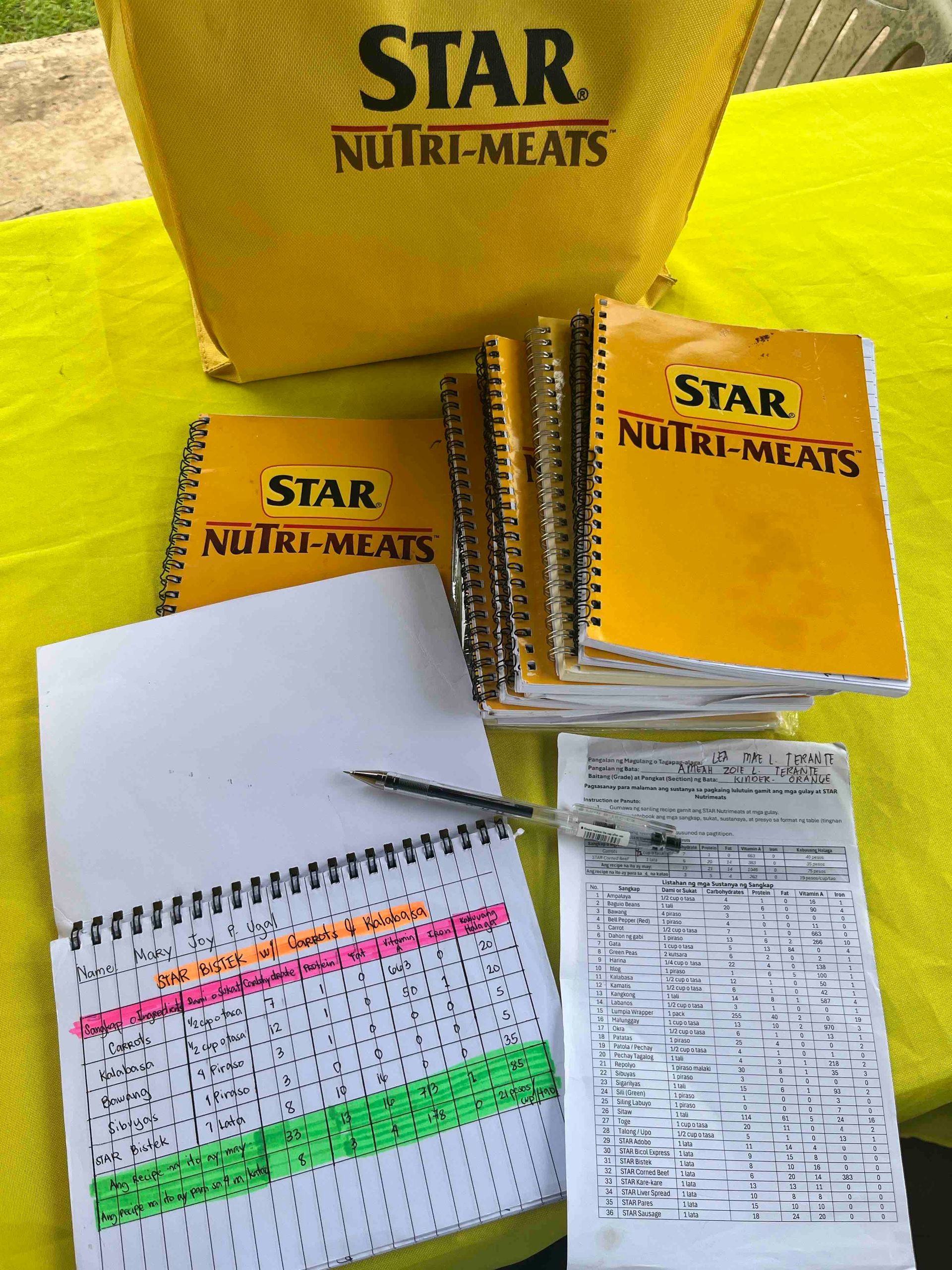
San Miguel Foods (SMF), in partnership with Payatas Elementary School and Barangay Toro Elementary School in Quezon City, successfully launched its pilot Nutrition Education Program from August to September 2025. The initiative aimed to help combat malnutrition by equipping 200 mothers with practical knowledge and skills in meal planning, food safety, and sustainable nutrition—guided by the Pinggang Pinoy food plate model. Over four consecutive Fridays, participants joined interactive learning sessions covering topics such as healthy meal planning, understanding macro and micronutrients, and safe food preparation. Each session featured hands-on cooking demonstrations using affordable, everyday ingredients and fresh produce, including STAR NutriMeats . Mothers learned to create nutritious, budget-friendly dishes following the ideal Pinggang Pinoy proportions : one-fourth carbohydrates, one-fourth protein, and one-half vegetables and fruits. The program also encouraged collaboration and creativity through workshops where mothers developed and shared their own healthy recipes, applying lessons on nutrition, safety, and affordability. This peer-to-peer learning approach fostered camaraderie, confidence, and a sense of empowerment among participants. With 100% target attendance across both schools, the program reached not only 200 mothers but also positively impacted their families by improving home nutrition practices. Participants showed greater awareness of balanced meal preparation, learned to identify nutrient-rich food sources more easily, and felt empowered to make healthier choices for their households. Beyond enhancing individual nutrition knowledge, the program also supported the Department of Education’s School-Based Feeding Program, helping strengthen households’ ability to sustain children’s nutrition and school performance. By fostering partnerships among schools, communities, and the private sector, SMF’s initiative addressed malnutrition at its roots—starting in the home. Encouraged by the success of the pilot run, SMF plans to expand the Nutrition Education Program to more schools in Quezon City and explore its integration into school-based nutrition activities with DepEd’s support. The long-term goal is to bring this model to more communities nationwide , inspiring a ripple effect of better nutrition practices across Filipino families.

Fueling The Balance Towards Wellness


September 18, 2025
In the evolving landscape of modern nutrition, prepacked foods have emerged as a reliable solution for individuals and families seeking safe, convenient, and high-quality food options.  While fresh, whole food remains essential to a healthy diet, the role of prepacked items should not be underestimated, especially when considering the demands of today’s fast-paced lifestyles and global food systems.
September 18, 2025
In Filipino households, food is more than nourishment. It’s a reflection of our culture, values, and love for family, tradition, and celebration. But with today’s fast-paced lifestyle, it’s harder to cook “lutong bahay” meals every day. That’s where meal prep comes in. With a bit of planning, you can enjoy delicious, healthy meals all week without spending hours in the kitchen. What is Meal Prep? Meal prep means preparing meals or ingredients ahead of time so you can eat better, save money, and reduce stress. Instead of cooking daily, cook in batches--ideal for busy parents, students, or anyone juggling a full schedule. Benefits of Meal Prep Saves time by making weekday meals faster and easier. Encourages healthier eating by avoiding fast food or overly processed snacks. Controls ingredients by limiting oil, salt, and MSG while keeping flavors. Reduces food waste by using leftovers wisely. Stretches your budget by buying in bulk and cooking in batches. To learn more about meal prep ideas using our products, visit HomeFoodie Meal prep isn’t about perfection - it’s about making life a little easier, one meal at a time. With just a bit of planning, you can eat better, spend less, and still enjoy the flavors you love. “Lutong bahay,” your way.
August 12, 2025
If you feel tired by mid-morning or find yourself reaching for your third cup of coffee by lunch, it might be time to check what’s on your plate. Food isn’t just fuel, it’s your daily power source. Here’s how to eat smart and stay energized, no matter how packed your schedule gets. 1. Build Balanced Meals Don’t wait for lunch or dinner to eat big. Your body needs a steady supply of fuel throughout the day. At every meal, aim for a good mix of: Complex carbs (brown rice, whole grain bread, oats, sweet potato) Protein (chicken, pork, tofu, fish, eggs, corned beef) Healthy fats (avocado, nuts, olive oil) Fiber-rich vegetables (leafy greens, carrots, broccoli) This combo keeps your blood sugar and energy levels steady. 2. Don’t skip meals—especially breakfast Skipping meals may save time, but it often leads to low energy and overeating later. Breakfast jump-starts your metabolism and helps you stay focused through the morning. Try these quick and energizing breakfast ideas: Lugaw with malunggay and Magnolia Brown Eggs Fried rice with Star Margarine Magnolia Pancakes with fresh sliced fruits Omelette with Purefoods Sweet Ham and Magnolia Cheezee 3. Stay Hydrated Even mild dehydration can make you feel tired, sluggish, or moody. It can also cause people to mistake thirst for hunger. Keep water close and sip often. Quick tips: Keep a tumbler at your desk or in your bag. Add cucumber, lemon, or mint for flavor Avoid sugary drinks that cause energy crashes. 4. Snack smart Snacking can help maintain energy if you choose the right kind. Skip chips, candies, and cookies, which give a quick spike and crash. Instead, opt for snacks that provide lasting fuel. Smart snack options: Boiled kamote (sweet potato) or sweet corn with Star Margarine or Dari Creme Pandesal with Purefoods Luncheon Meat and Magnolia Creamy Chicken Spread 5. Watch the sugar and refined carbs Sugar gives you a temporary energy spike followed by a sharp drop. That’s why sweets or white bread might make you feel alert for a moment then totally drained afterwards. Better swaps: Brown or red rice instead of white rice Whole grain crackers instead of sugary biscuits Unsweetened drinks like black coffee, tea, or infused water 6. Use caffeine wisely Caffeine gives a boost, but too much can mess with your sleep. Stick to: One to two cups of coffee in the morning. No caffeine after 2 p.m. Green tea for a gentler lift 7. Sleep matters No amount of healthy eating can make up for poor sleep. If you’re running on fumes, look at your sleep habits too. You don’t need to overhaul your whole diet overnight. Start with simple changes: eat more whole foods, stay hydrated, and avoid skipping meals. Energy isn’t just about how much you eat, it’s about what and when you eat. Fuel your body right.

Wellness Begins With What’s On Our Plate


Let’s shift the focus to the goodness of what we eat.